
On Fasting
A Spiritual Discipline I Lack

When you fast, don’t be gloomy like the play-actors. They make their faces quite unrecognizable, so that everyone can see they’re fasting. I’m telling you the truth: tidy your hair and beard the way you normally do, and wash your face, so that others won’t notice you’re fasting—except your father, privately. Then your father, who sees in private, will repay you. Matthew 6:16–18
If I am being honest, I have slightly dreaded this week’s topic on fasting. It is a topic that I am honestly just not good at. It is likely the spiritual discipline in which I need the most growth, and therefore it becomes hard to write about. It also seems to be a topic that many commentators dread as well. Many—not all—have ignored these few verses and move from the Lord’s Prayer straight to thoughts on anxiety. But we must address fasting, as it mirrors the section on piety that comes before the Prayer.
So, in an effort not to speak hypocritically, I have chosen to fast through breakfast today and am writing this with a hungry stomach. I do not share this to pride myself, but rather to highlight my own lack in this regard. A single meal at a time is pretty much all I can do and I realize I have much room for growth here.
Regarding fasting, Lloyd-Jones writes, “The fact is, is it not, that this whole subject seems to have dropped right out of our lives, and right out of our whole Christian thinking.”[1] Scot McKnight echoes this sentiment: “Yet the church’s tradition aside, fasting is largely irrelevant to most Protestants today, though it remains a fixed part of the calendar and ideal spiritual practice in church traditions.”[2] Why is it a subject that is so often neglected?
It is possible that there was a pushback against Catholic teaching and longstanding traditions. There are church traditions that set standards for fasting, whether on Fridays, during Lent, or at other times. The Protestant movement was good in so many ways, and yet, in the spirit of protesting, there were some spiritual practices that were pushed aside. Fasting may have been one of them, slowly taking a back seat in our spiritual lives.
Fasting has also become a personal piety issue, with this verse often being used to bolster arguments for doing it in secret and fasting individually. But I do not think that is what Jesus meant. He is speaking against hypocrisy and doing things for the attention of others, not against doing things in community. There are many examples throughout both the Old and New Testaments where entire communities gathered together to fast collectively. Let us not ignore their collective actions.
Scot McKnight writes, “The focus of the Bible on fasting is not on what we get from fasting or on motivating people to fast in order to acquire something, but instead lands squarely on responding to sacred moments in life.”[3] Many of these sacred moments were community events, such as when Queen Esther was preparing to go and see the king. The community was called upon to fast collectively in response to that sacred moment. Just as with giving and prayer, which Jesus has already addressed, fasting is not meant to be a show. But that does not mean there will not be times to fast together. In fact, it is often easier to fast with others when you know you are part of something beyond yourself.
Let’s take a short look at what fasting is and what it is not. Both Lloyd-Jones and McKnight define fasting as abstinence from food for spiritual reasons. It is depriving our bodies of nourishment for a limited time.[4] In place of the bread of this world, we ingest the Bread of Life, Jesus. Examples of fasting found throughout Scripture always involve a withdrawal from food and often from water.
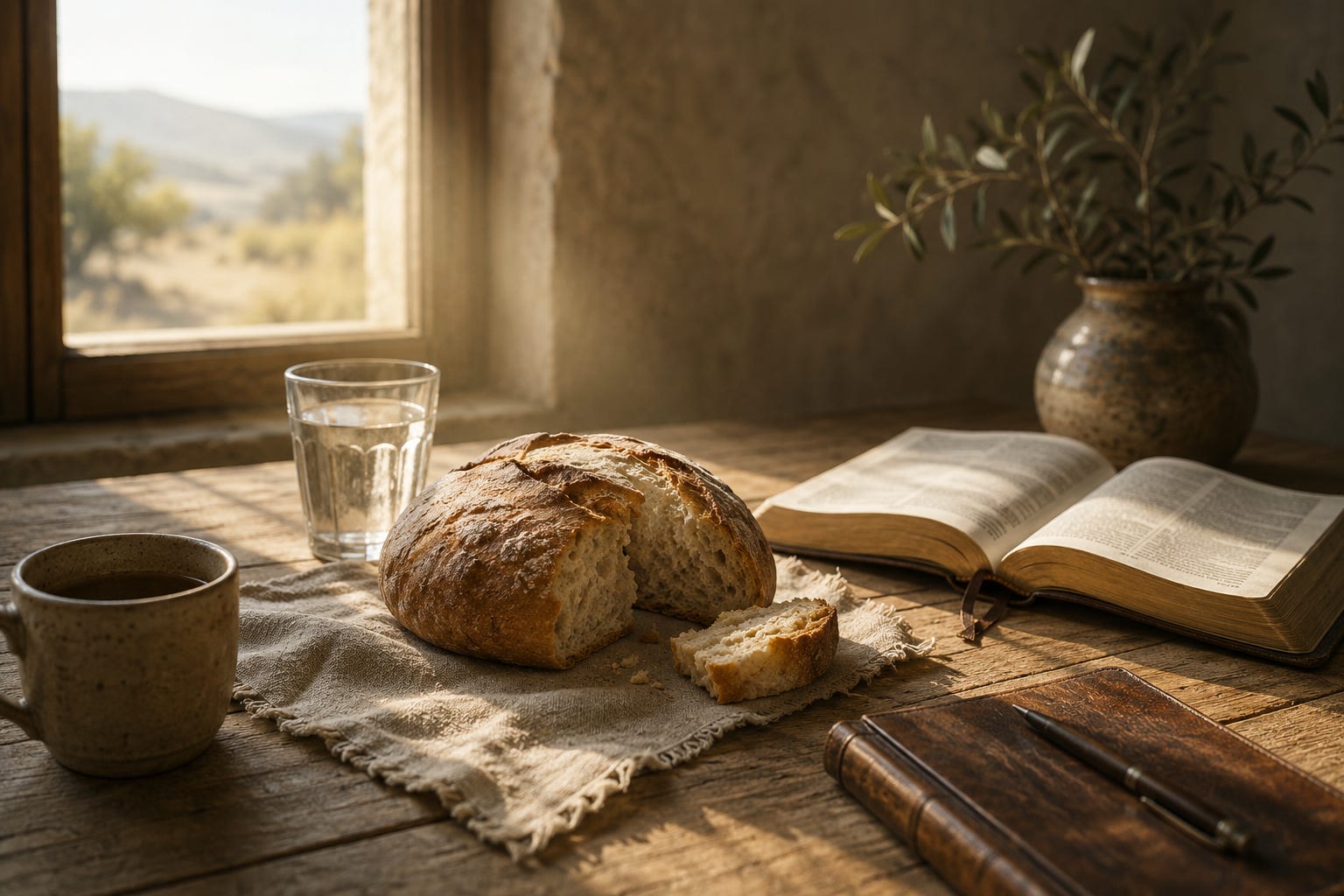
Fasting is not taking a break from technology or simply abstaining from desserts. Both are good in and of themselves, but they are not biblical fasting. Last week, I went camping for four days and did not have any cell service. It was great to be without technology, but it was not a fast. Camping had aspects of solitude and silence, but not fasting. Let’s not cheapen the spiritual discipline of fasting by making it something that it is not.
I think fasting is one of the things we have the most to learn about from some of our African brothers and sisters. Not long ago, an African friend was asking me about my fasting practices, to which I sadly replied that I am not very good at it. He grew up in a Christian tradition that incorporated fasting on a regular basis, sometimes for many days at a time. This has become a regular part of his spiritual life. He is not alone in this. Most Africans I know have strong fasting practices that they incorporate into their lives. I am thankful for friends like this who encourage us to continue growing in ways where we lack.
Finally, let us remember that we do not fast to gain spiritual points. Fasting is not a ticket into heaven. Fasting does not remove our sins. Instead, fasting places us in a posture of spiritual hunger where we seek the face of Jesus. As a spiritual discipline, fasting reminds us of our own frailty and humanity while also reminding us of the provision of our heavenly Father.
[1] Lloyd-Jones, Studies in the Sermon on the Mount, 311.
[2] McKnight, Sermon on the Mount, 199.
[3] McKnight, Sermon on the Mount, 194.
[4] McKnight, Sermon on the Mount, 194. Lloyd-Jones, Studies in the Sermon on the Mount, 314.